Microneedling for Acne Scars: Can It Really Improve Your Skin?
Acne can be frustrating enough on its own, but for many people, the marks left behind are the part that lingers the longest. Even after breakouts settle, uneven texture and scarring can remain, affecting confidence and how comfortable you feel in your skin.
At Dr Hazel Skin Solutions, one of the most common questions we hear is: “Does microneedling actually work for acne scars?”
The honest answer is yes, microneedling can improve the appearance of certain acne scars, but results depend on the type of scarring, your skin, and having realistic expectations. It’s not an overnight fix, and it’s not about achieving “perfect” skin. Instead, the goal is healthier-looking skin with smoother texture and more even tone over time.
Understanding Acne Scars
Not every mark left after acne is a true scar.
Many people experience redness or pigmentation after spots heal. These post-acne marks often fade gradually with time, sun protection, and consistent skincare. Post-inflammatory hyperpigmentation (PIH) is common after acne, particularly in darker skin types. Although PIH is not a true scar, it can sometimes persist for months and often responds well to treatments such as microneedling, which may help improve pigmentation whilst stimulating collagen production and improving overall skin texture.
True acne scars are different. They develop when inflammation damages deeper layers of the skin, changing the skin’s structure beneath the surface. Because of this, scars don’t simply fade away on their own.
There are several common types of acne scars:
Ice Pick Scars
These are deep, narrow scars that look like tiny punctures in the skin. Because they extend deeply into the skin, they can be difficult to treat with microneedling alone and may respond better to localised chemical reconstruction techniques such as TCA CROSS (trichloroacetic acid chemical reconstruction of skin scars).
Boxcar Scars
Boxcar scars appear as defined depressions with sharper edges. Mild to moderate boxcar scars often respond well to collagen-stimulating treatments such as microneedling.
Rolling Scars
Rolling scars create an uneven, wave-like texture. These are commonly improved with treatments designed to stimulate collagen production, such as microneedling.
If scars are tethered to deeper tissues, combination treatments such as subcision with dermal filler may sometimes provide better improvement by releasing the tethering beneath the skin.
Raised Scars
Some scars become raised because the skin produces too much collagen during healing. These require careful assessment, as certain scar types, particularly keloid scars, may not be suitable for microneedling.
Why Acne Scars Develop
Acne scarring can happen for many reasons, including:
- Severe or long-lasting inflammation
- Delayed treatment of acne
- Picking or squeezing spots
- Hormonal or cystic acne
- Genetics and individual healing response
Sometimes, even when you’ve done everything “right”, scars can still form because of how your skin naturally heals.
What Microneedling Actually Does
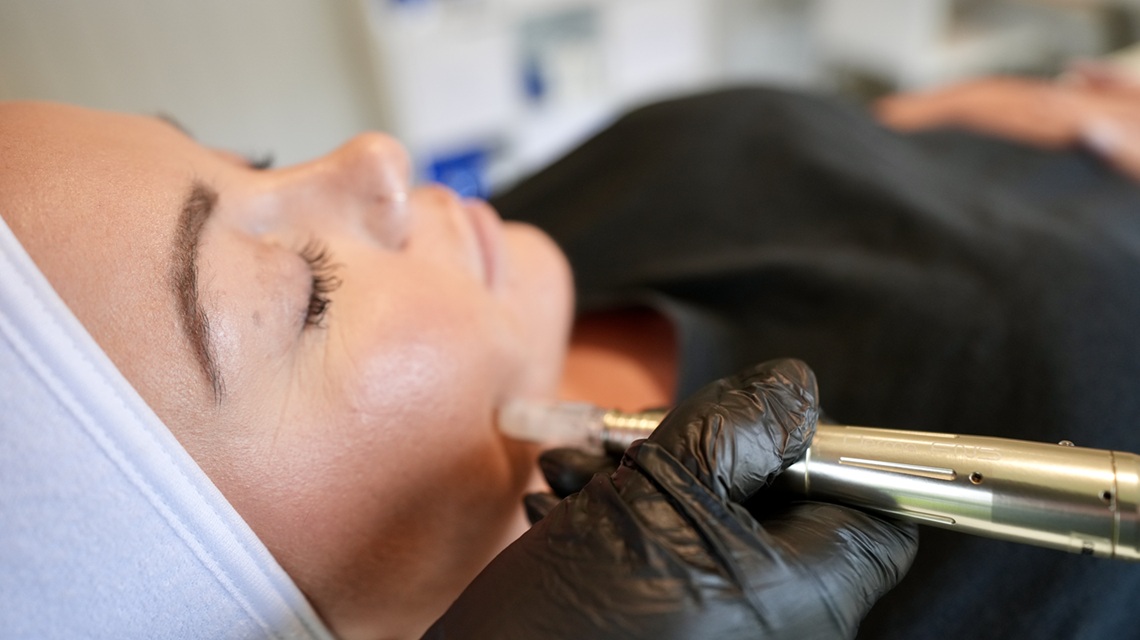
Microneedling works by creating tiny, controlled micro-injuries in the skin using very fine needles. This process encourages the skin’s natural repair response and stimulates collagen and elastin production.
Collagen is the protein responsible for keeping skin firm and structured. When acne scars form, collagen becomes unevenly distributed, leading to visible depressions or texture changes.
By stimulating new collagen, microneedling may help to:
- Improve overall skin texture
- Soften shallow scars
- Reduce unevenness
- Refine the appearance of enlarged pores
- Create smoother, healthier-looking skin
Results are gradual rather than immediate, as collagen remodelling takes time.
Professional Microneedling vs At-Home Rollers
There are many at-home microneedling rollers available online, but these are usually far more superficial than professional treatments.
Professional microneedling devices allow precise control over needle depth and treatment intensity, while maintaining proper clinical hygiene standards.
For acne scarring, treatment depth and technique are extremely important. Incorrect use of at-home devices can sometimes lead to irritation, infection, or pigmentation issues. At-home devices may also be difficult to adequately sterilise between uses, increasing the risk of introducing bacteria into the skin and potentially causing infection or worsening inflammation.
Which Acne Scars Respond Best?
Microneedling tends to work best for:
- Mild to moderate rolling scars
- Mild boxcar scars
- General uneven texture
- Rough skin surface
- Post-inflammatory hyperpigmentation (PIH) following acne
Many people also notice that their skin appears brighter and smoother because improved texture reflects light more evenly. Microneedling may also help improve pigmentation and overall skin quality by stimulating skin renewal processes.
However, microneedling may be less effective for:
- Very deep ice pick scars
- Severe tethered scars
- Certain raised or keloid scars
In these cases, combination treatments may sometimes be recommended following assessment. Tethered scars, for example, may respond better to treatments such as subcision with or without dermal filler.
How Long Does It Take to See Results?
Microneedling is a gradual treatment. Most people require a course of sessions rather than a single appointment.
Improvements typically develop over several weeks and months as collagen production increases and the skin continues to remodel itself.
The timeline varies depending on:
- Scar depth and type
- Skin quality
- Healing response
- Consistency of treatments
- Skincare and sun protection
- Lifestyle factors such as smoking, stress, and sleep
Patience is an important part of the process.
Realistic Expectations Matter
One of the biggest misconceptions about acne scar treatment is the idea that scars can be completely erased.
Microneedling is designed to improve the appearance of scars, not remove them entirely.
Good results often mean:
- Softer-looking scars
- Smoother skin texture
- Reduced shadowing from uneven skin
- Improved skin confidence
- Makeup applying more evenly
Subtle improvements can make a significant difference in how your skin looks overall.
When Microneedling May Not Be Suitable
Microneedling should usually be postponed if you have:
- Active inflamed acne
- Skin infections
- Cold sores
- Sunburned or highly sensitised skin
- A compromised skin barrier
In some cases, active acne needs to be controlled before scar treatment begins.
Microneedling and Different Skin Tones
Microneedling can often be safely performed on a wide range of skin tones, but careful planning is important for people prone to pigmentation.
At Dr Hazel Skin Solutions, treatment plans are tailored individually to minimise the risk of post-inflammatory hyperpigmentation (PIH) and support healthy healing. Whilst PIH following professional microneedling is uncommon when appropriate protocols are followed, careful treatment planning remains important, particularly in darker skin types or those with a history of pigmentation.
This may involve:
- Barrier repair before treatment
- Adjusted treatment intensity
- Careful spacing between sessions
- Strict sun protection
- Tailored skincare advice
Some patients may also benefit from combination approaches, such as adding exosomes after treatment, which may help support healing, reduce inflammation and potentially enhance skin rejuvenation results.
What Does Treatment Feel Like?
Most people describe microneedling as mildly uncomfortable rather than painful. The sensation is often compared to light scratching or prickling across the skin.
After treatment, redness similar to mild sunburn is common for the first 24–48 hours. Some people also experience slight swelling, dryness, or tightness while the skin heals.
Aftercare Following Microneedling
Good aftercare plays an important role in healing and results.
After treatment, you’ll usually be advised to:
- Use gentle skincare only
- Keep the skin hydrated
- Avoid exfoliating acids and active ingredients temporarily
- Avoid heavy exercise and heat for a short period
- Wear daily SPF
Skin normally settles gradually over several days.
Frequently Asked Questions
Can microneedling completely remove acne scars?
No treatment can guarantee complete scar removal, but microneedling may significantly improve the appearance and texture of certain scars.
Does microneedling work on older scars?
Yes, older scars can still respond to collagen stimulation, although results vary depending on scar type and depth.
How many treatments are usually needed?
Most people require a course of treatments for noticeable improvement.
Can I have microneedling if I still get occasional breakouts?
Possibly, but active inflammation should be assessed first to ensure treatment is appropriate.
Can microneedling make scarring worse?
If performed incorrectly or on unsuitable skin, complications such as irritation or pigmentation can occur. This is why professional assessment and treatment planning are important.
Considering Microneedling in Warwickshire?
If you’re thinking about microneedling for acne scars, the best starting point is a professional consultation. Understanding your scar type, skin condition, and treatment goals helps create a realistic and personalised plan.
At Dr Hazel Skin Solutions, every treatment plan is tailored to the individual, with a focus on natural-looking skin improvement and long-term skin health.. Click here to enquire or to book a consultation in clinic.